
For centuries meditation has been rooted in traditions, and now science is catching up to explain why it works so well. Beyond helping us slow down in a busy world, mindfulness actually reshapes the brain and the way we experience life. Mindfulness is one of those practices that sounds simple but leaves a big impact.
How Mindfulness Changes the Brain
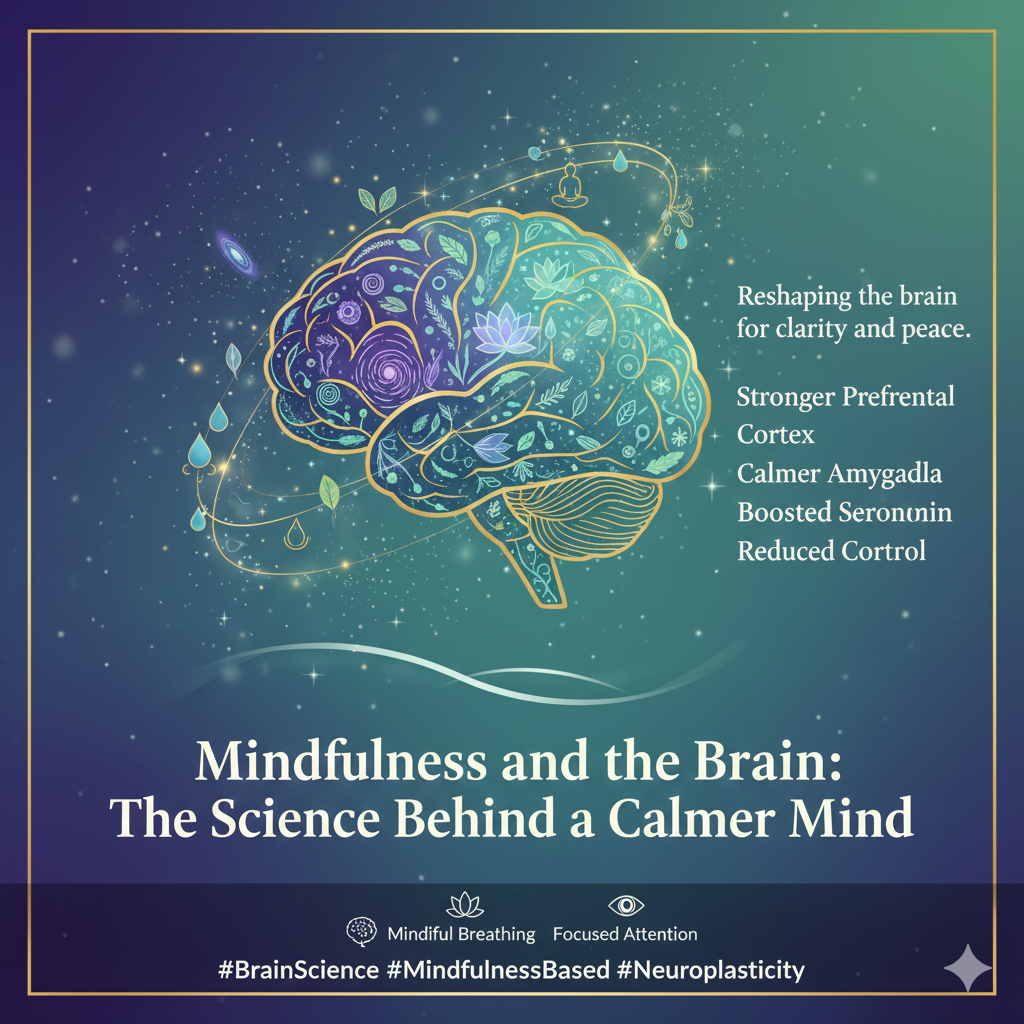
When someone practices mindfulness regularly, the brain begins to change. The prefrontal cortex, which is responsible for focus, decision-making, and keeping emotions in check, becomes stronger. At the same time, the amygdala, the part of the brain that reacts to stress and fear, becomes less overactive. This shift is why people often describe feeling more balanced and less reactive when challenges come their way. They still face stress, but the response is calmer, more thoughtful, and less overwhelming.
Chemical Changes behind Mindfulness
Mindfulness also works on a chemical level, not only structural . It increases serotonin and GABA, both of which naturally lift mood and promote relaxation. Cortisol, the stress hormone that leaves the body feeling tense and exhausted, drops with consistent practice. This explains why even short moments of mindful breathing can leave us with a sense of relief. The brain and body are resetting themselves in real time.
Mindfulness in Daily Life
The impact doesn’t end once meditation is over. These changes carry into daily life. Someone who practices mindfulness might notice fewer racing thoughts at night, more patience in relationships, or a stronger ability to handle work stress without burning out. Even cravings and habits become easier to manage because mindfulness gives space between the urge and the action. It’s this gap that makes healthier choices possible.
Busting Myths About Mindfulness
One of the misconceptions about mindfulness is that it requires long hours of sitting in silence. In reality, it can be woven into small moments of the day. Paying attention to your breath while walking, noticing the taste of your food without distraction, or simply pausing before responding in a conversation, all of these are forms of mindfulness. The benefits build through consistency, not perfection.
Why Mindfulness Matters Today
What makes mindfulness especially relevant today is the way it connects ancient wisdom with modern science. Hospitals use mindfulness-based programs for pain and stress. Therapists recommend it for anxiety and depression. Workplaces introduce it to improve focus and resilience. It’s not a passing trend but a practical skill supported by research and real-world results.
At its core, mindfulness is about paying attention to the present without judgment. That small shift has ripple effects that reach into brain structure, body chemistry, and everyday experiences. Over time, the brain learns a new pattern, one that handles stress with clarity instead of chaos, one that strengthens focus instead of scattering it, one that makes space for connection and calm in a world that rarely slows down.